Graduation Day

th-3

“There’s a time for joy. There’s a time for tears. A time we’ll treasure through the years.  We’ll remember always graduation day.”

On Thursday night, I had the honor of addressing graduates at two of our high schools.  As I surveyed the audience, I saw both tears and an abundance of joy.  I spoke about several students of the class of 2018, whom had overcome insurmountable odds to receive a diploma–a Congo refugee, who had been raped and fled to America with her baby.  This senior mastered English in less than six months, worked, and went to school full time and earned a scholarship to nursing school.  I spoke about a special education student who was a member of the golf and the tennis team and the concert band.  I spoke about a male dancer who’s a character of the video game, So You Think You Can Dance, –yes, he’s that well-known, and a guy who invented a new guitar pedal, which will revolutionize modern music.
th-6

When I reflect on my high school graduation–over 50 years ago, I remember how special it was for the families of many of my classmates, whose parents were immigrants.  I remember the fabulous graduation parties with wonderful ethnic food.  And I remember the brewing war in Viet Nam.  While it was a joyous time, it was also a time for fear.

Last night, my neighbor (originally from England) asked, “Sue, what’s up with all this graduation bs?  In England, high school graduation was expected. University graduation was cause for a celebration.”

th-7

Now, I could have launched into a long oration about the history of American education and the symbolic, significance of high school graduation, but I refrained.  For me, high school graduation is the first educational mile marker on the road of life.  Yet, I’m dismayed it has been both marginalized and commercialized by such ludicrous traditions of preschool, kindergarten, sixth grade, and eighth grade graduations.  Caps and gowns, limos, and parties ad nauseam for mere children? Why?


I Hate Snakes

snake pics (22)


Yes, I suffer from ophidiophobia or fear of snakes.  When I walk into a classroom and the teacher has a snake in a glass aquarium, I freak!  I perspire and feel nauseous.  I pray I won’t faint in front of the class.  Lo and behold, this week two encounters almost sent me to an early grave.

I was brunching with a high school assistant principal and merely asked, “What’s up in your world?”

“OMG! I have to tell you what happened.  A teacher called my office to report a kid had a snake in his backpack.”

I gagged on my waffle.  “Dear God!”

“The custodian and I went to the classroom and took the student into the hall.  The young man was wearing a hoodie.  Just as I was about to inquire about the snake, it poked its head out of the hoodie front pouch.”

Again, I gagged.  I would have died in the hallway and been trampled during class change.  “What did you do?”

“Followed protocol.  Took the kid and his snake to my office and had him put the snake in a large plastic container, called the parent, etc.  Look here’s a picture.”

th

Lordy it was huge! “What is it?”

“A ball python, named Keith. Mom took it home.  The kid received a restorative discipline.  It was fine.”

Fine?  Doubtful.

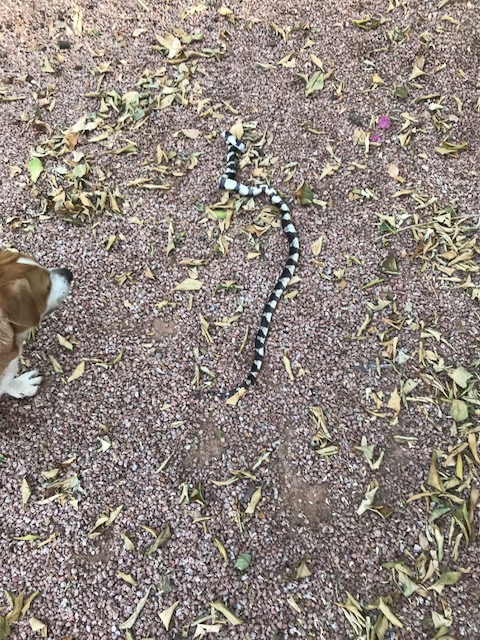
Two days later, an unexpected visitor slithered into my backyard.  My dogs were hysterical.  I tried to get them in the house and away from the harmless king snake, but none listened.  Then Max, my cabana boy’s dog and self-appointed defender of me, leapt into action. He grabbed the snake and tossed it in the air three times.  The snake left the earthly world, and Max proudly strutted around as my savior from evil.

IMG_1640

And though it was painful for me to witness, I was delighted Max agreed with me, “The only good snake is a dead one.”


Validating Student Voice


Supreme Court Ruling: “Students do not shed constitutional rights of freedom of speech or expression at the schoolhouse gate.” Tinker v. Des Moines, February 24, 1969.  (Unless their acts of expression are disruptive to the educational process.)

Many of the key participants in the Revolutionary War were surprisingly young:

  • Marquis de Lafayette, 18
  • James Monroe, 18
  • Gilbert Stuart, 20
  • Aaron Burr, 20
  • Alexander Hamilton, 21
  • Betsy Ross, 24
  • James Madison, 25

Young people, like the students in our schools and universities.  However, unlike the founding fathers our informational world has shrunk.  Students today are much more aware of global affairs and have key-stroke access to myriads of up-to-the-minute information.  They are socially conscious, they are articulate, creative thinkers, and they don’t want to be murdered in their schools.

In 2012, when 26 were slaughtered at Sandy Hook Elementary School, we gasped in horror.  Even POTUS wept as he met with loved ones of those lost. Yet, school shootings continued.  The recent heinous act in Parkland, Florida, awakened teens across the country.  When I was in Houston earlier this week, my high school teacher/coach niece said her students were suddenly aware.  “Mrs. Cook, Parkland is so similar to us.  It could happen here at TJHS!”

With this new realization, students have held walkouts–all peaceful, most of them where they stood silently for 17 minutes in remembrance of the 17 lost in Parkland.  Thankfully, most school leaders worked with students to ensure their safety by opening their football fields, gymnasiums, or auditoriums to allow the kids to gather for 17 minutes.  Of course, there are a handful of schools who chose to suspend student participants–stupid. A teachable moment lost.

Many of the these high schoolers will vote in 2018.  They will outlive you and me.  We should guide and applaud their activism in hope our world will be a safer, kinder, and more inclusive place than it is now.

Who wants to go dump some tea in Boston Harbor?

th